The Ultimate Guide to Safe Chicken Cooking in Canada
Chicken is one of Canada's most popular proteins. It's versatile, affordable, and perfect for everything from weeknight dinners to backyard barbecues. But because raw chicken can naturally contain bacteria such as Salmonella and Campylobacter, proper handling and cooking are essential for protecting your family and ensuring every meal is both safe and delicious.
Whether you're roasting a whole chicken, grilling chicken breasts, air frying wings, or preparing meal prep for the week, this guide covers everything Canadian home cooks need to know.
Why Chicken Food Safety Matters
Unlike beef steaks, chicken should always be cooked thoroughly to destroy harmful bacteria.
Fortunately, food safety doesn't have to mean dry, overcooked meat. Using the correct techniques—and especially a digital meat thermometer—you can enjoy juicy chicken while meeting Canadian food safety recommendations.
Safe Internal Chicken Temperatures
According to Health Canada, these are the recommended minimum internal temperatures:
|
Chicken Cut |
Safe Internal Temperature |
|
74°C (165°F) |
|
|
74°C (165°F) |
|
|
74°C (165°F) |
|
|
74°C (165°F) |
|
|
74°C (165°F) |
|
|
Stuffing |
74°C (165°F) |
|
82°C (180°F) measured in the thickest part of the breast |
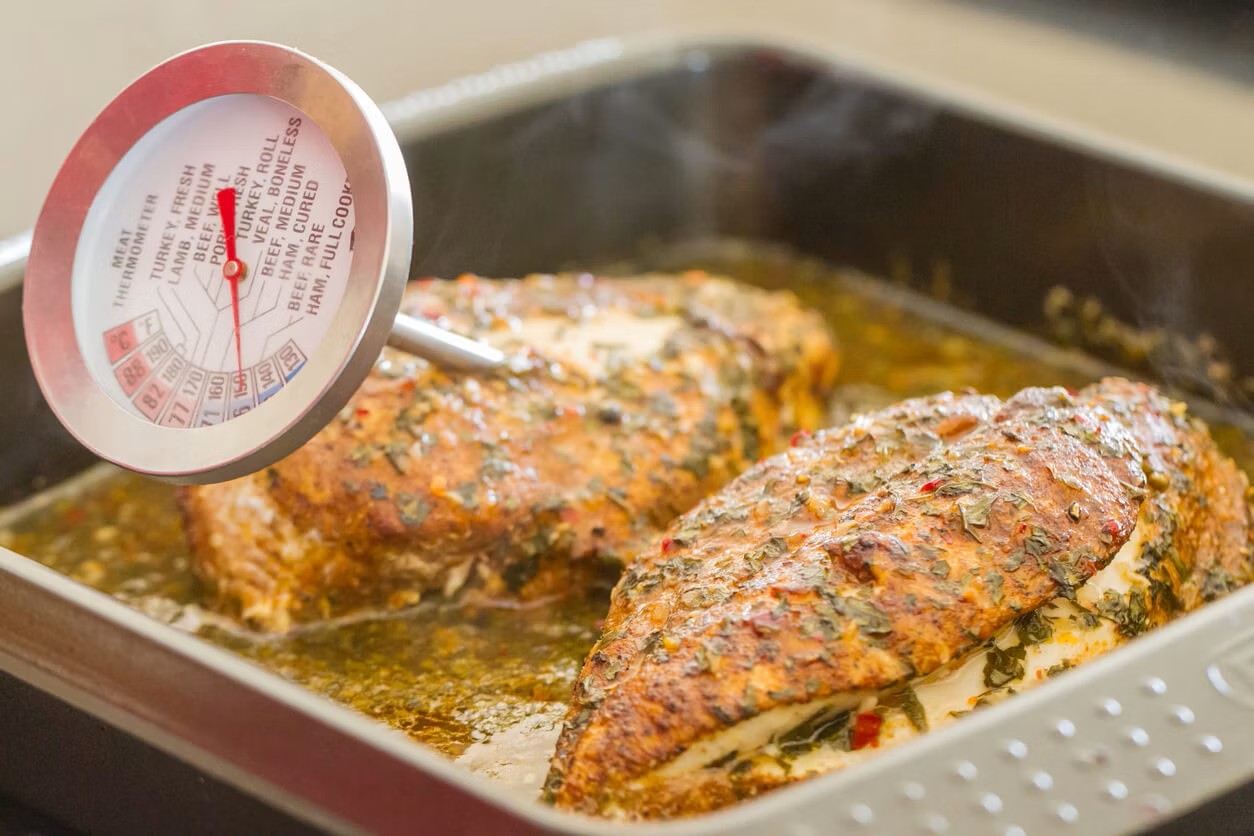
Always insert your thermometer into the thickest portion of the meat without touching bone.
Don't Judge Chicken by Colour
One of the biggest cooking mistakes is assuming chicken is fully cooked because:
- The juices run clear
- The meat is white
- The outside looks browned
These are not reliable indicators.
Chicken can appear fully cooked while remaining under the recommended internal temperature. Likewise, some properly cooked chicken may still have a slight pink colour near the bone.
A digital instant-read thermometer is the only dependable way to know when chicken is safe to eat.
How to Prevent Dry Chicken
Many people accidentally overcook chicken because they're worried about food safety.
Instead:
- Cook over medium heat.
- Check the temperature near the end of cooking.
- Remove from the heat as soon as the safe temperature is reached.
- Rest the chicken for 5–10 minutes before slicing.
Resting allows the juices to redistribute, resulting in more tender and flavourful meat.
Safe Chicken Preparation Tips
Safe cooking begins before the chicken reaches the pan.
Wash Your Hands
Wash your hands with warm soapy water before and after handling raw chicken.
Avoid Cross-Contamination
Use separate cutting boards for:
- Raw poultry
- Vegetables
- Ready-to-eat foods
Clean knives, countertops, and utensils thoroughly after preparing raw chicken.
Never Wash Raw Chicken
Contrary to old kitchen habits, washing raw chicken spreads bacteria through water droplets onto sinks, countertops, and nearby foods.
Cooking—not washing—is what destroys harmful bacteria.
Fresh chicken should be refrigerated at 4°C (40°F) or below.
General guidelines:
- Cook fresh chicken within 2–3 days.
- Freeze chicken if you won't use it within that time.
- Store raw chicken on the bottom shelf to prevent drips onto other foods.
If frozen, thaw chicken safely:
- In the refrigerator (best method)
- In cold water, changing the water every 30 minutes
- In the microwave if cooking immediately afterward
Never thaw chicken on the kitchen counter.
Best Cooking Methods
Oven
Roasting creates evenly cooked, juicy chicken with crispy skin.
Ideal for:
- Whole chickens
- Bone-in thighs
- Drumsticks
- Thighs
Grilling produces excellent flavour but requires close attention to internal temperature.
Keep the lid closed whenever possible for more even cooking.
Air Fryer
Air fryers cook chicken quickly while creating a crispy exterior with minimal oil.
Perfect for:
- Wings
- Chicken breasts
- Boneless thighs
Always verify doneness with a thermometer.
Pan Frying
Chicken breasts and thighs cook beautifully in a skillet.
Finish thicker pieces in the oven if necessary to ensure even cooking.
Leftover Chicken Safety
Cooked chicken should be refrigerated within two hours.
Reheat leftovers until they reach 74°C (165°F) before serving.
Properly stored cooked chicken generally keeps well in the refrigerator for several days.
Common Chicken Cooking Mistakes
Avoid these common errors:
- Guessing doneness by colour
- Skipping the thermometer
- Cross-contaminating cutting boards
- Leaving chicken at room temperature too long
- Thawing on the counter
- Overcooking out of fear
Frequently Asked Questions
Is slightly pink chicken safe?
Colour alone doesn't determine safety. The internal temperature must reach the recommended safe level.
Can I cook frozen chicken?
Yes, although it takes longer. Always verify the internal temperature before serving.
Is washing chicken recommended?
No. Washing raw chicken increases the risk of spreading bacteria around your kitchen.
What's the most important kitchen tool?
A quality digital instant-read meat thermometer.
Shop Premium Chicken Online at ButcherBox.ca
Cooking safe, delicious meals starts with high-quality ingredients.
At ButcherBox.ca, you'll find premium Canadian chicken that's carefully selected and delivered directly to your door across Ontario. Whether you're preparing juicy grilled chicken breasts, roasting a whole bird, or stocking up for weekly meal prep, quality chicken combined with proper food safety practices helps you serve meals your family can enjoy with confidence.
Browse our full selection of premium chicken products and discover why thousands of Ontario families trust ButcherBox.ca for convenient online meat delivery.
Safe chicken cooking doesn't have to be complicated.
Remember these three essentials:
- Handle raw chicken carefully.
- Cook to the recommended internal temperature.
- Always use a digital meat thermometer.
Following these simple practices will help you enjoy tender, flavourful chicken while keeping your kitchen safe every time.